TCF or DELF? Same French, different test
Where the two exams overlap, where they part ways, and which PéPi page to open next.
79 articles
Clear filtersWhere the two exams overlap, where they part ways, and which PéPi page to open next.
Decide who is reading, then choose a French opening and closing that match. Articles, forum posts and notices need neither.
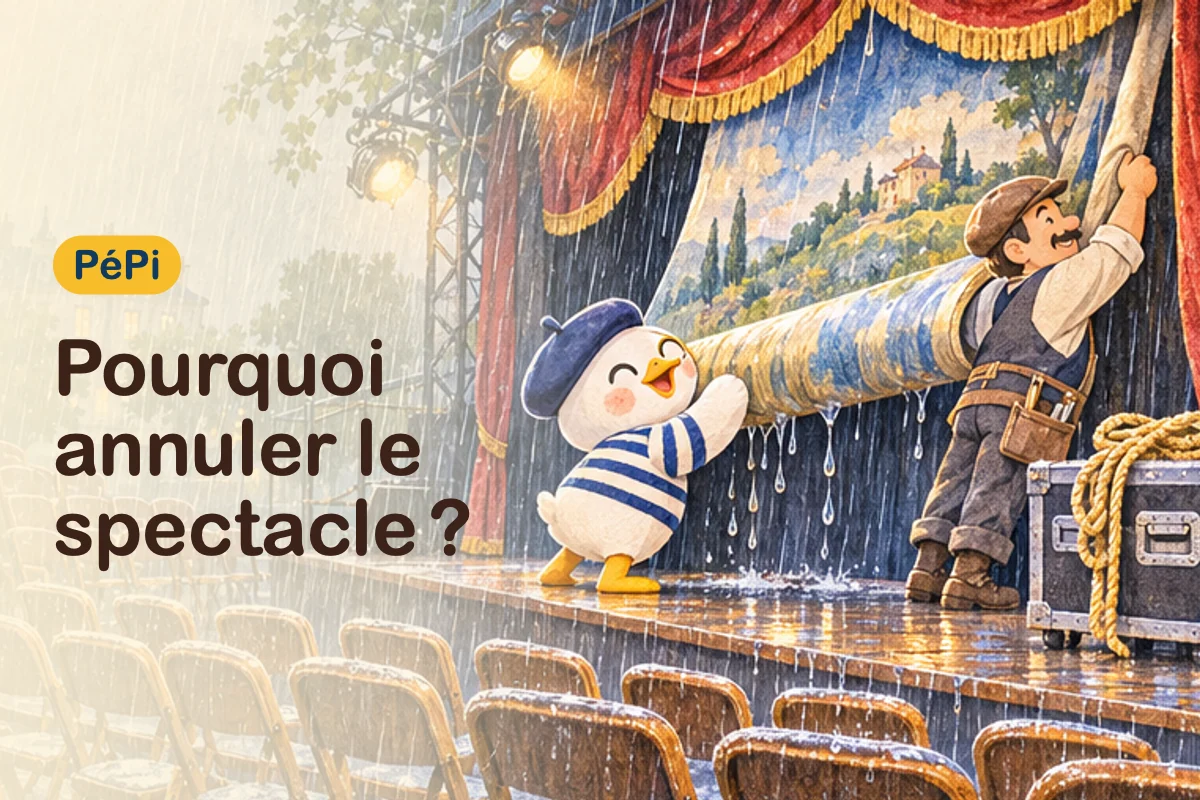
Rain and a cancellation belong in the same message. Try moving from cause to result, then turn the sentence around.
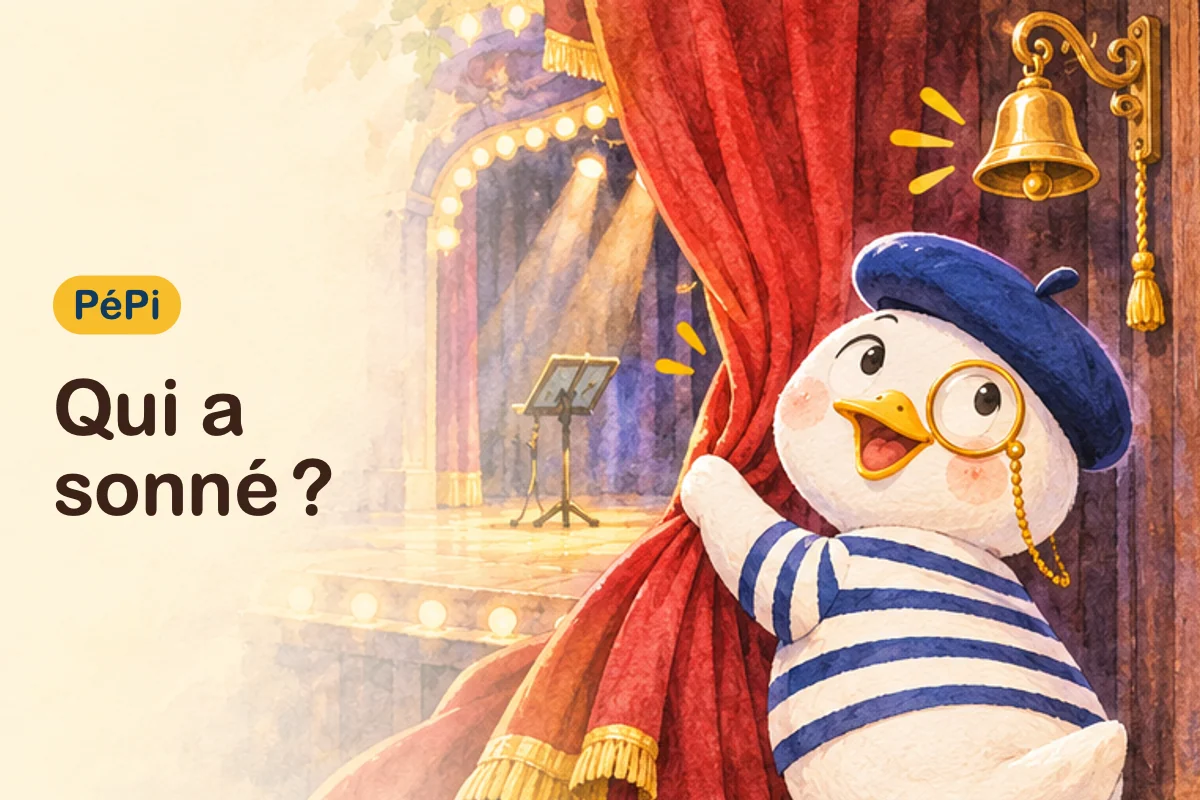
PéPi catches a sound by chance. Putting an ear to the door calls for a different verb.
PéPi would love to meet up but has to work on Saturday. A good reply lets both facts through.
Nothing is added to the spelling, yet an extra sound appears between two words. Trace it back to the word before the gap.
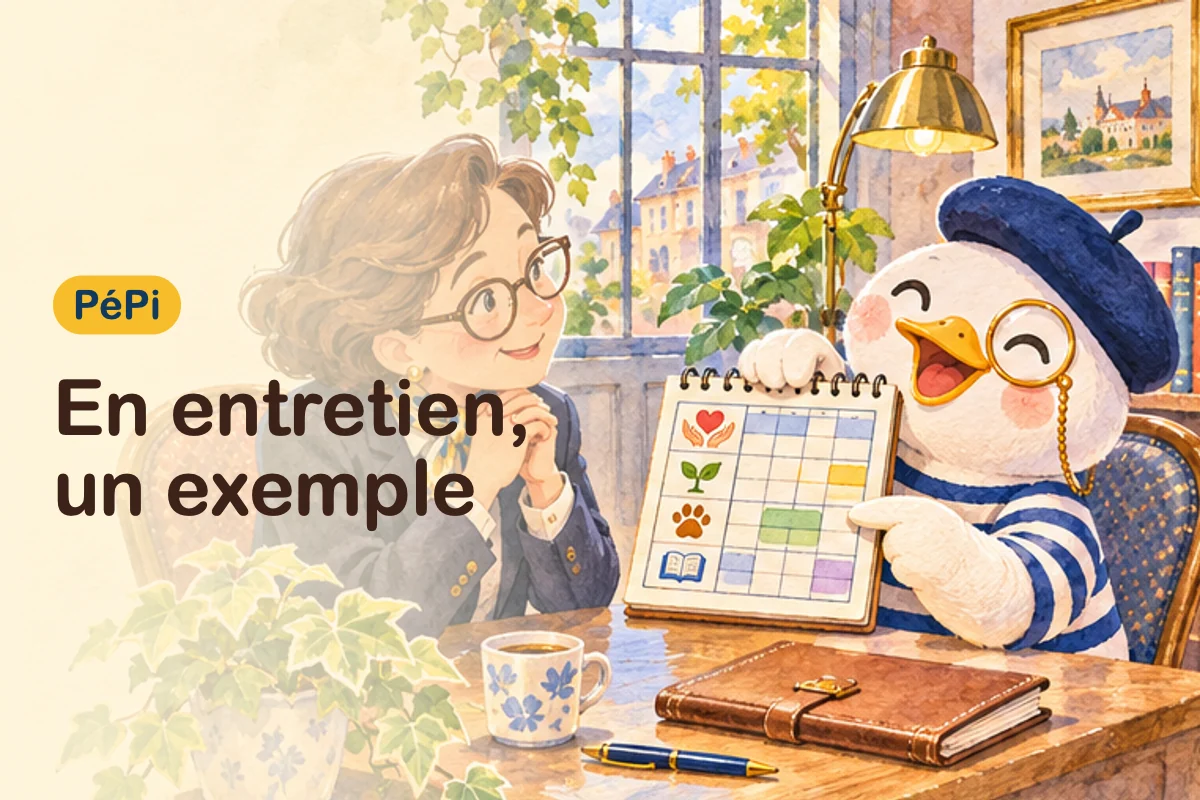
PéPi brings three adjectives to the interview. The interviewer asks for one example.
PéPi leaves a gap in le club … je participe. The way back starts with the original verb.
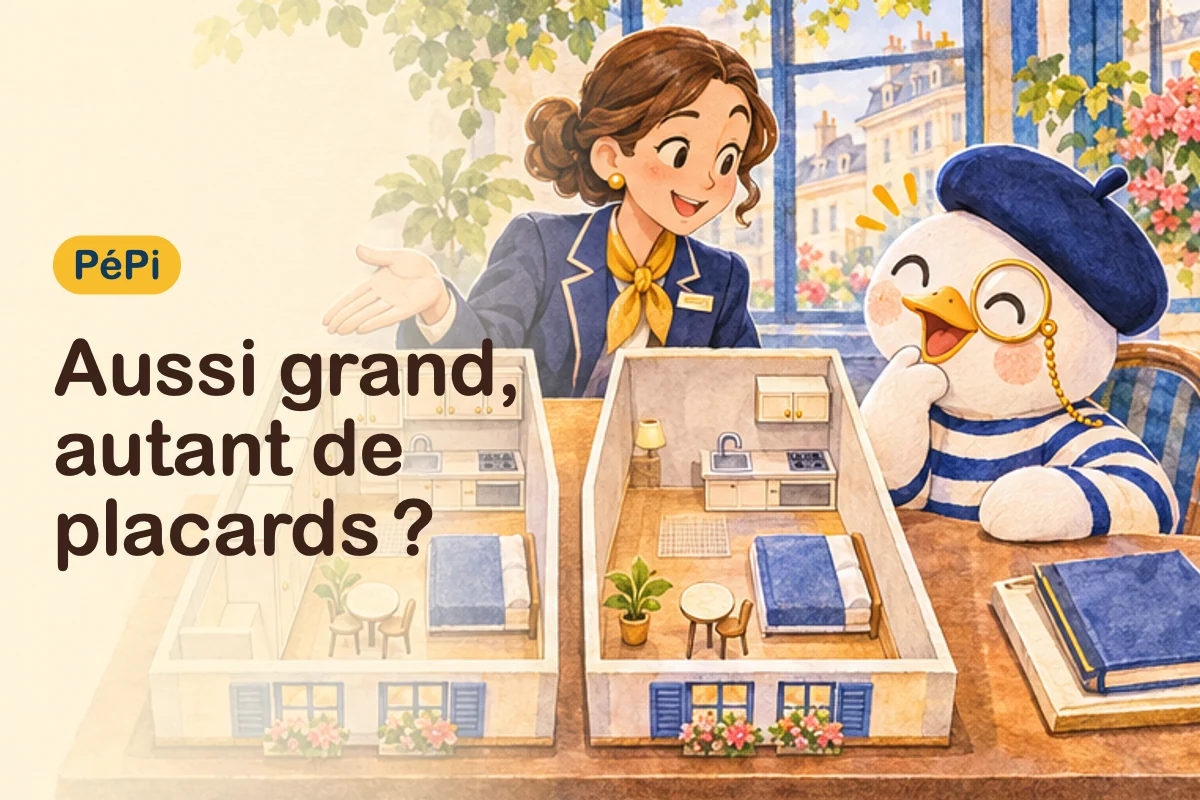
PéPi views two flats. They match for size but differ in storage. French has two ways to say “as much”.
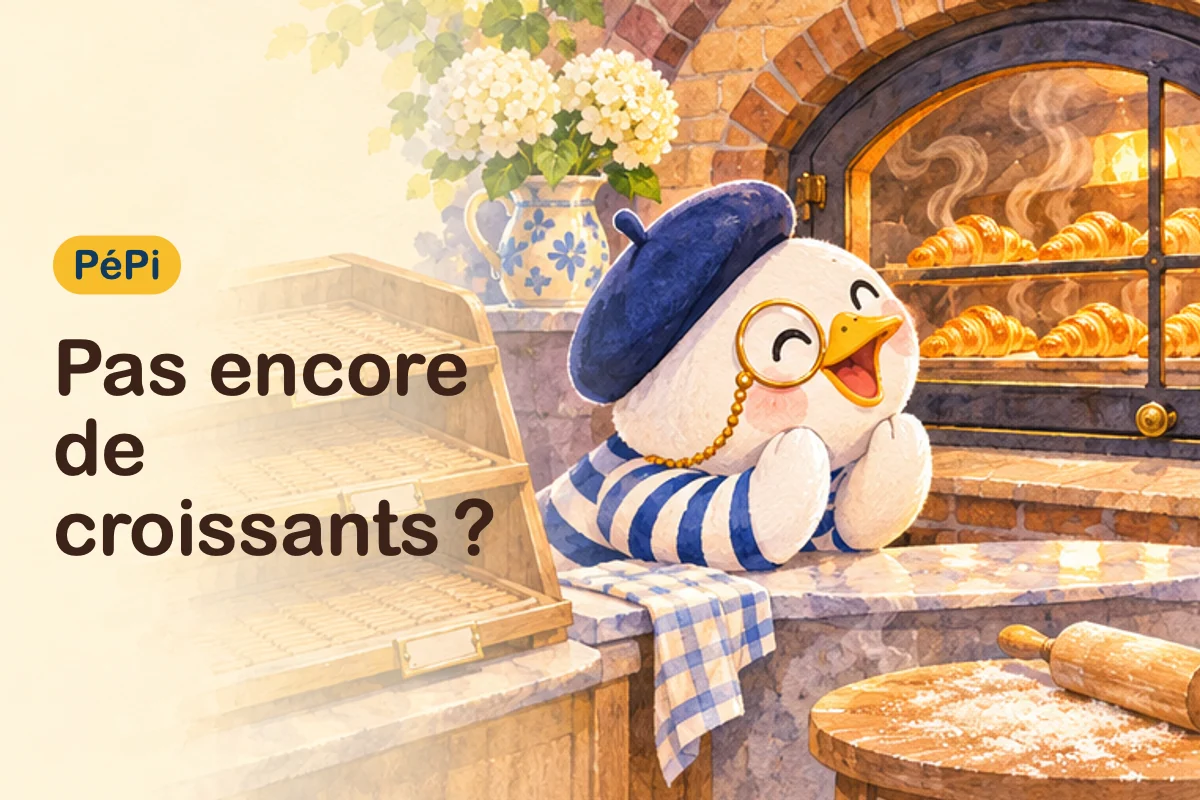
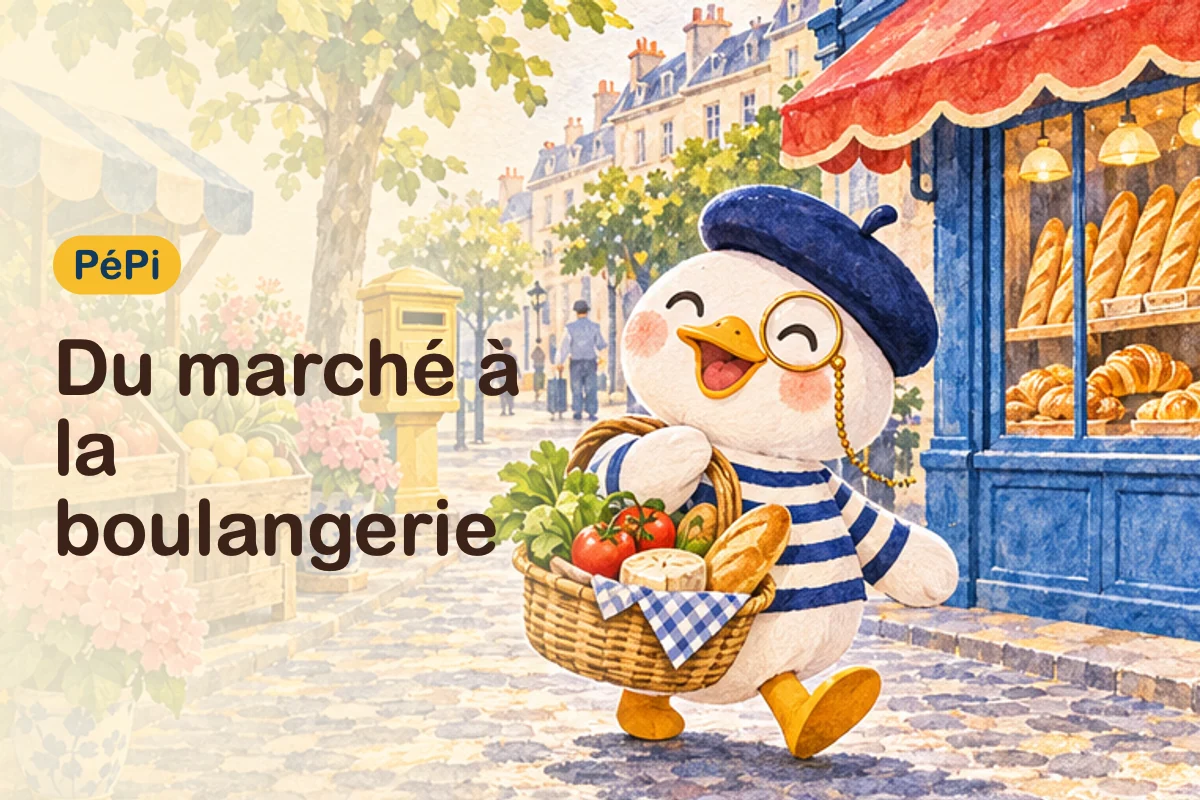
PéPi will wait if the croissants are still baking. If they’ve sold out, it would be nice to know before ordering coffee.
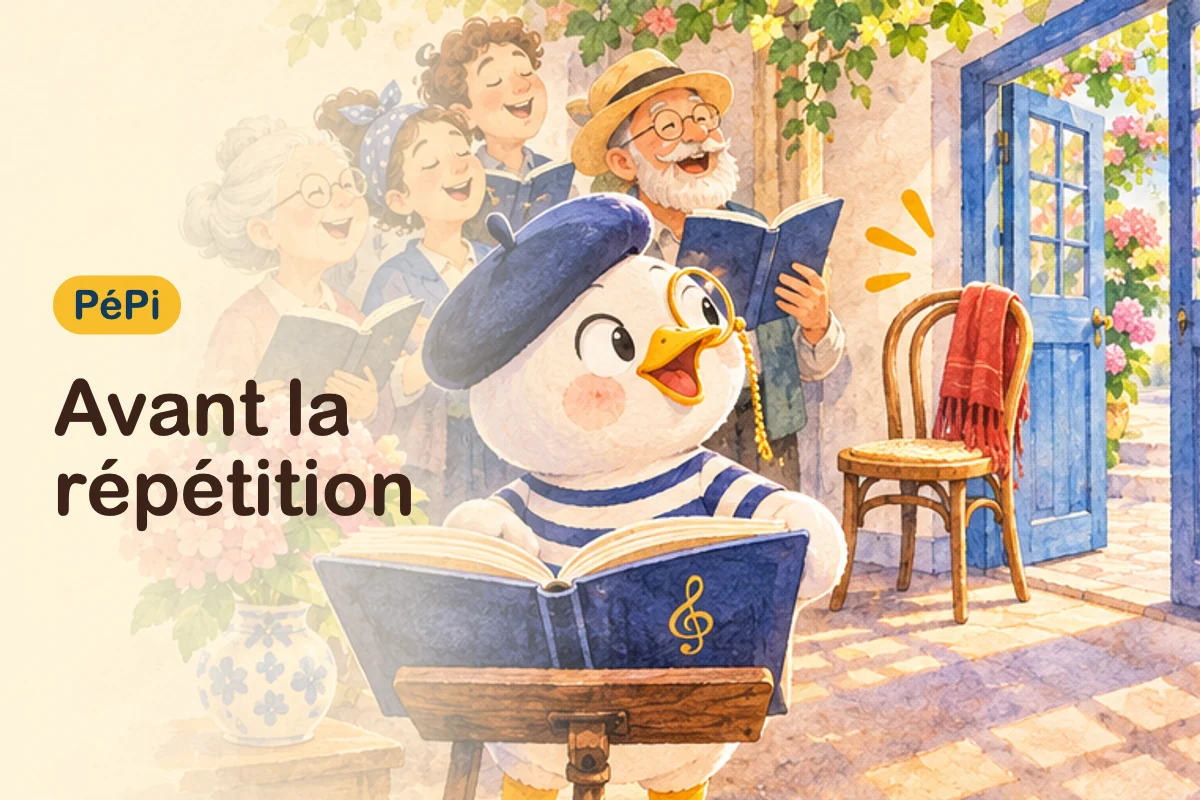
In the rehearsal room there’s a requirement, a wish and relief when someone finally shows up. Listen to what comes before que.
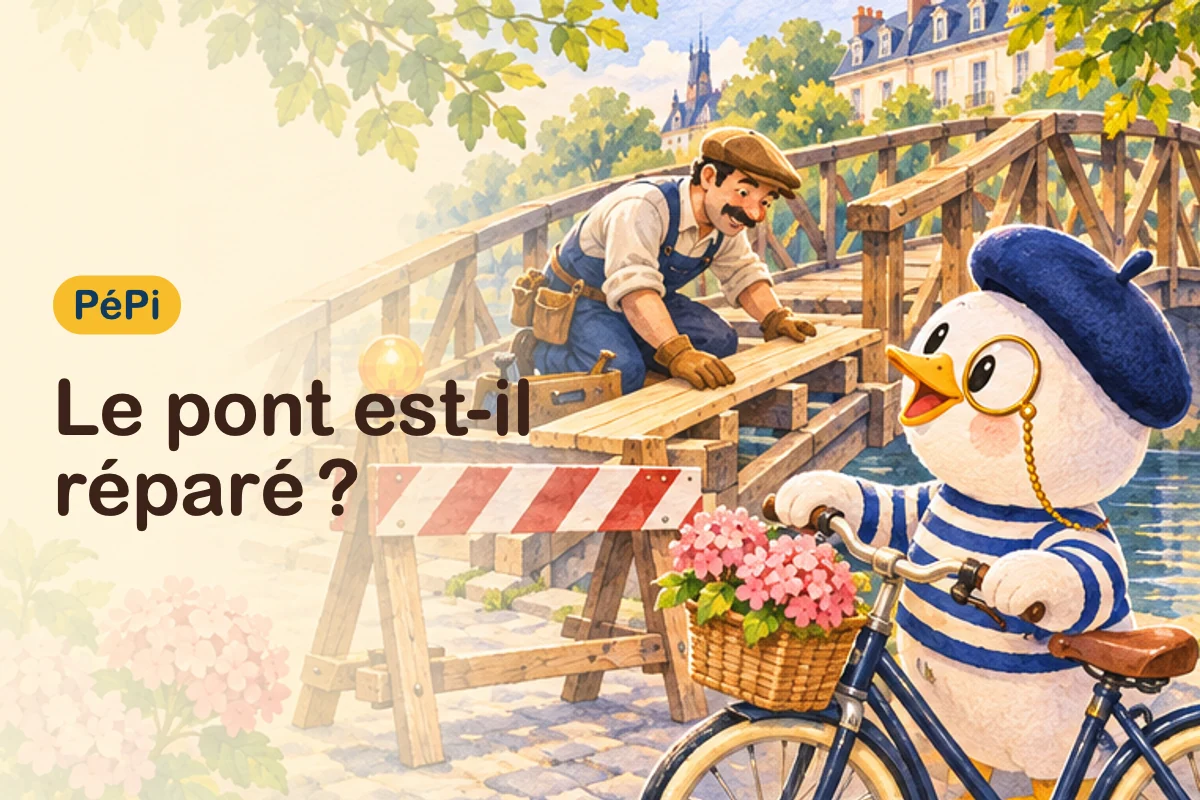
A cyclist stops at a repair notice. The urgent question is whether the bridge can be crossed this morning.
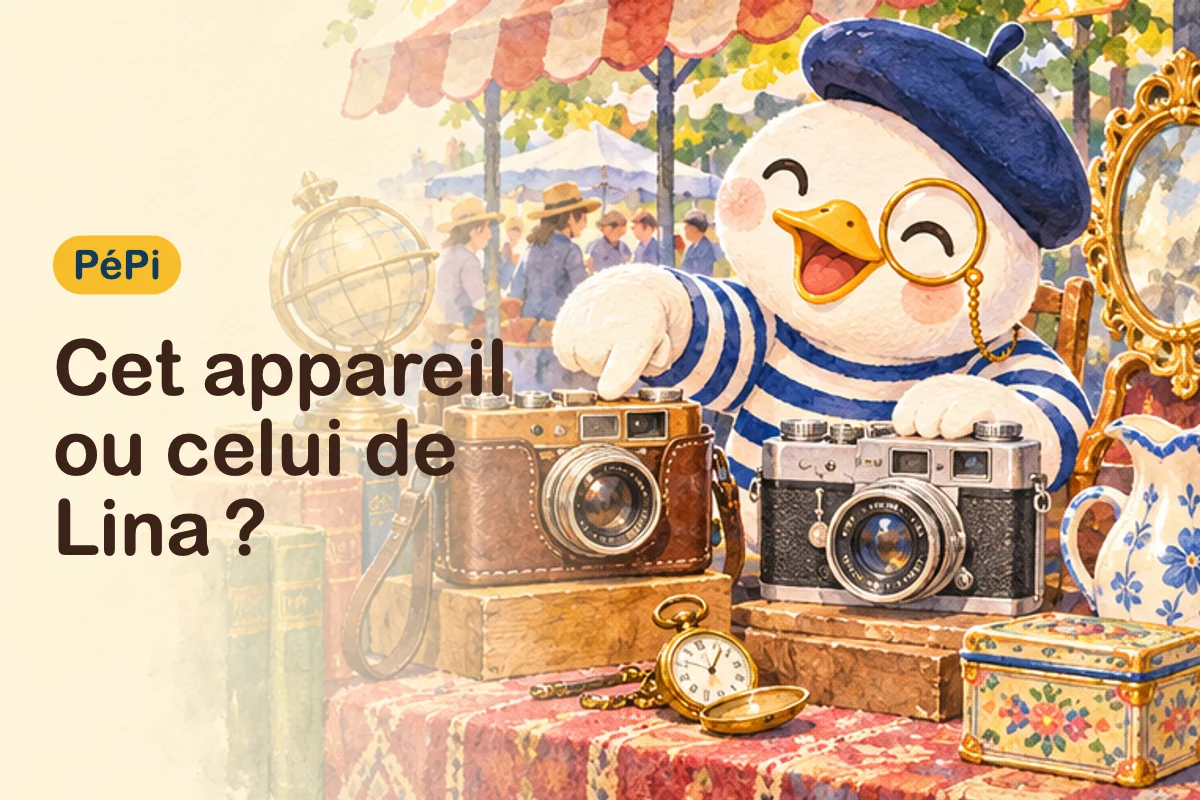
At the flea market, PéPi points and says “this one.” In French it matters whether the word for the camera comes next.
The same number on the clock can answer two different questions.
Your friend wants to know if you got seats. You tell her you decided to book. Should she pack? Two little French phrases make all the difference: décider de and réussir à.
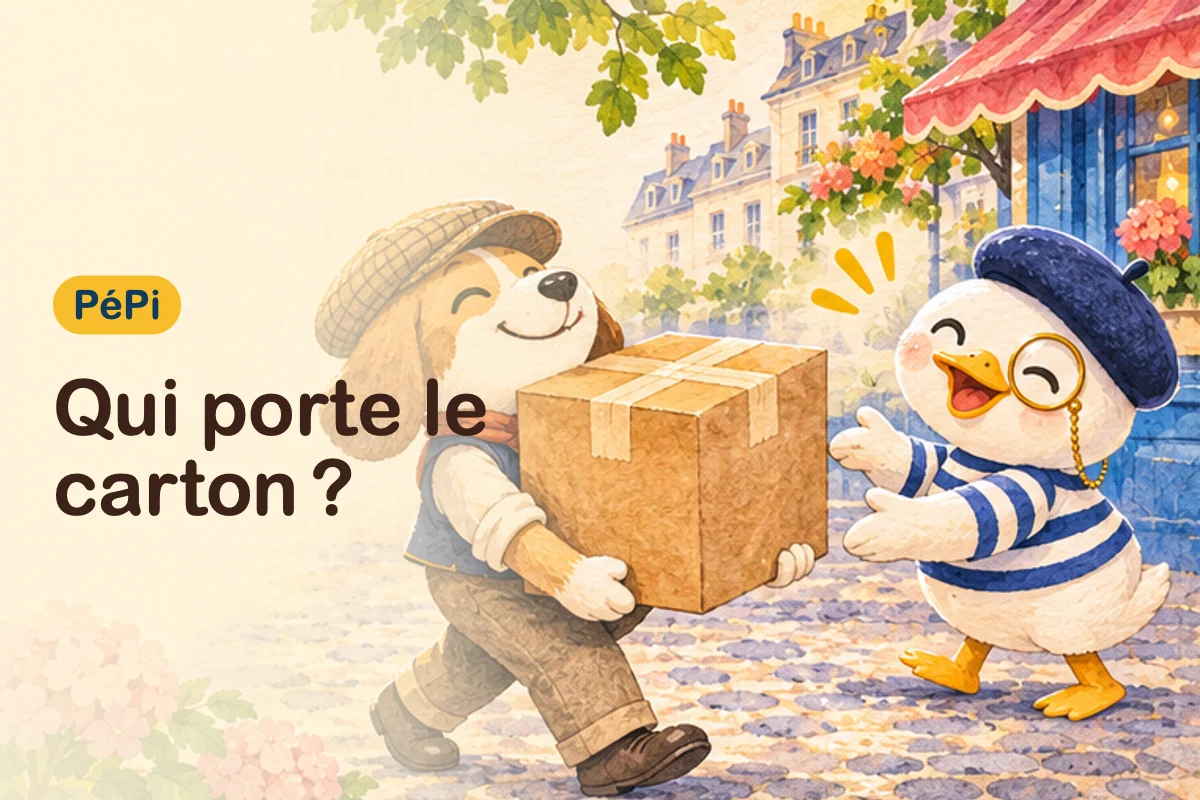
Two people, one box, and a verb meaning “ask”. The missing piece is who will do the carrying.
An -ant ending can show how, what happened at the same time, or what something is like. Follow one umbrella into a gallery.
Everyone in the book club remembers a fox. To settle the genre question, PéPi asks how the story is told.
Thai doesn’t distinguish upper and lower case. In a French email, one familiar word suddenly asks you to choose.
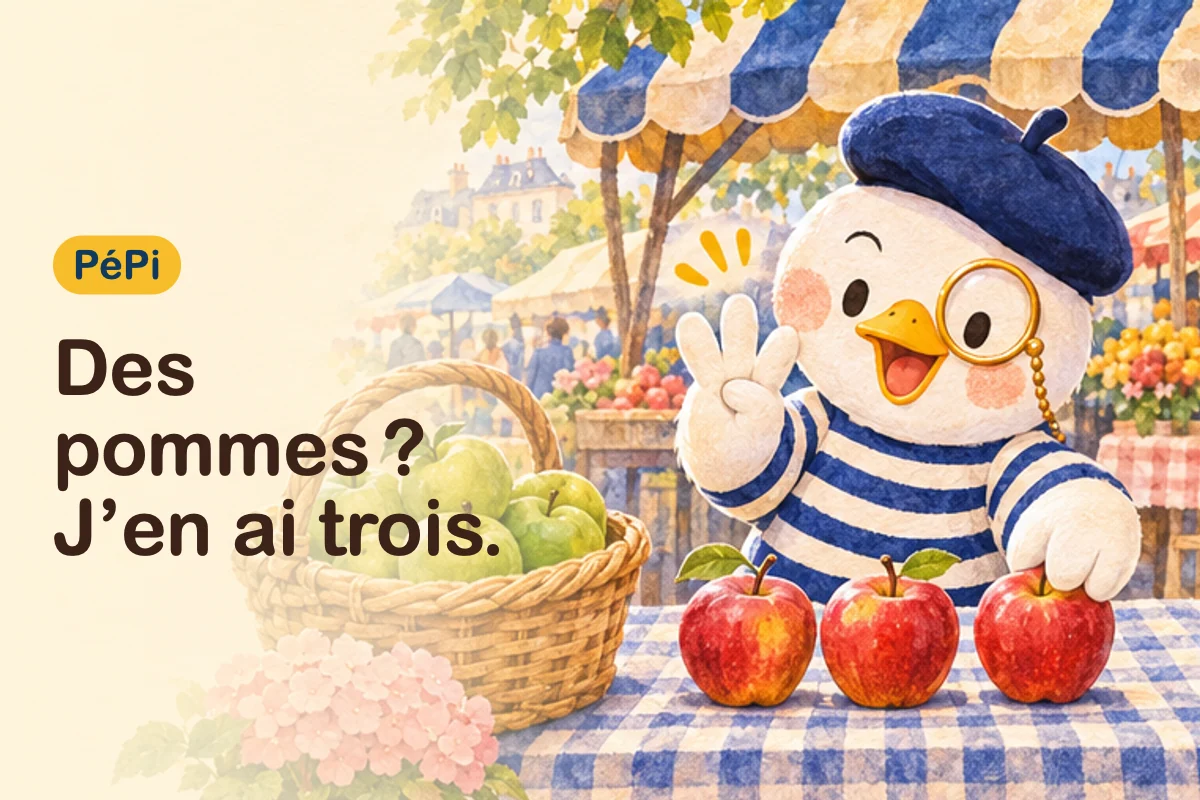
PéPi asks for three apples from the basket. When en replaces the apples, what happens to the number?
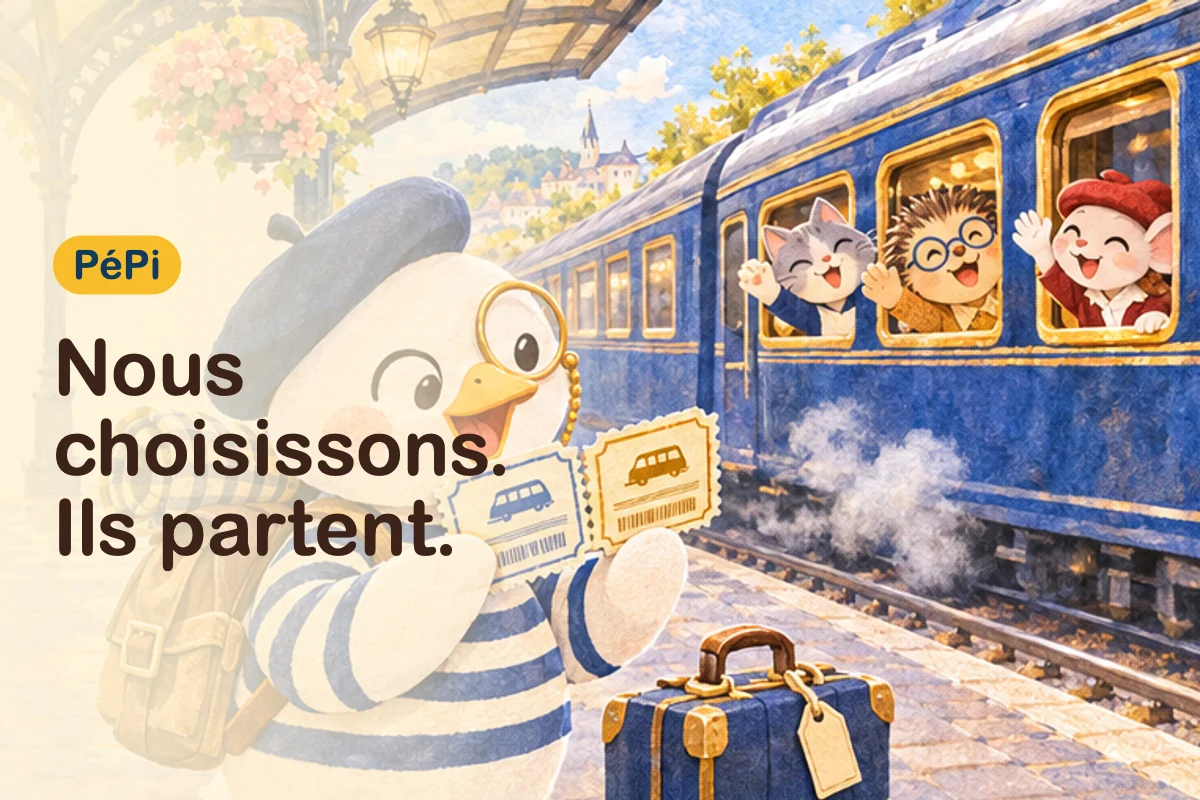
The ticket is gone and the train has left. PéPi imagines how the past might have gone differently.
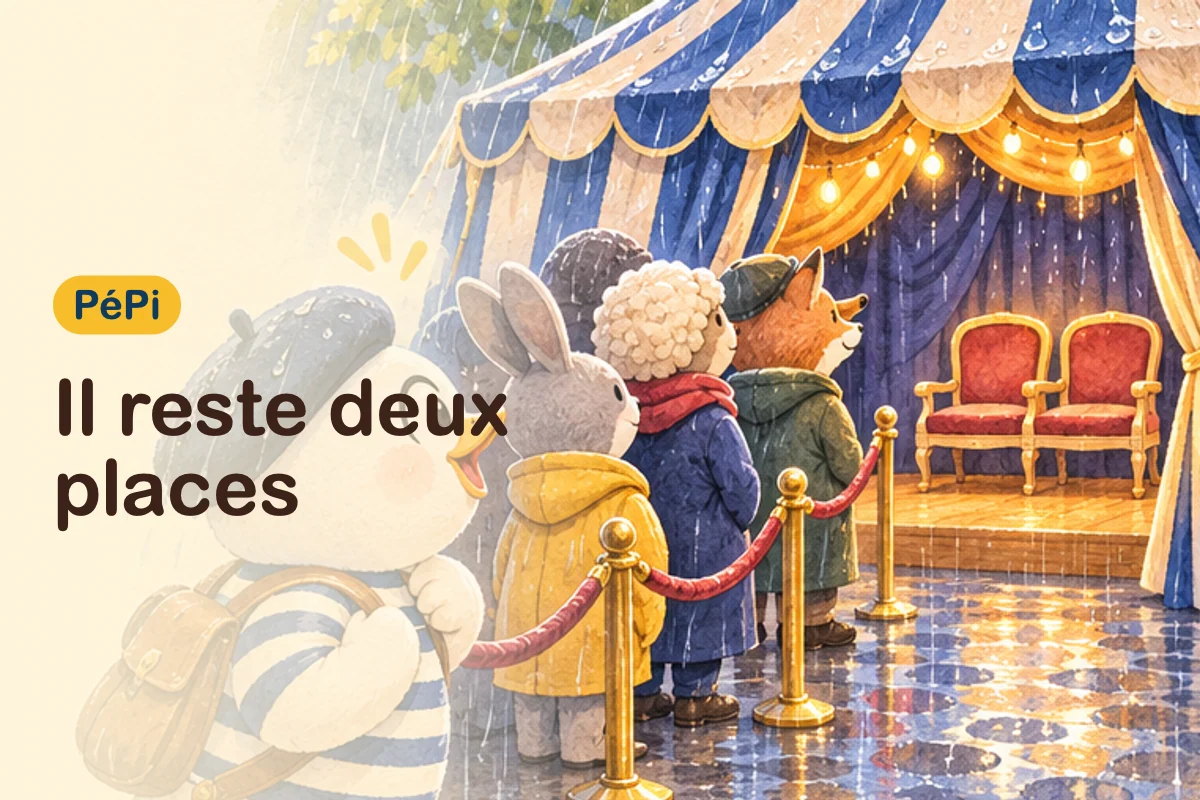
It’s raining, two places are left, and it’s possible to enter. French can start all three with il.
Both messages involve two people and a café. They call for different answers.
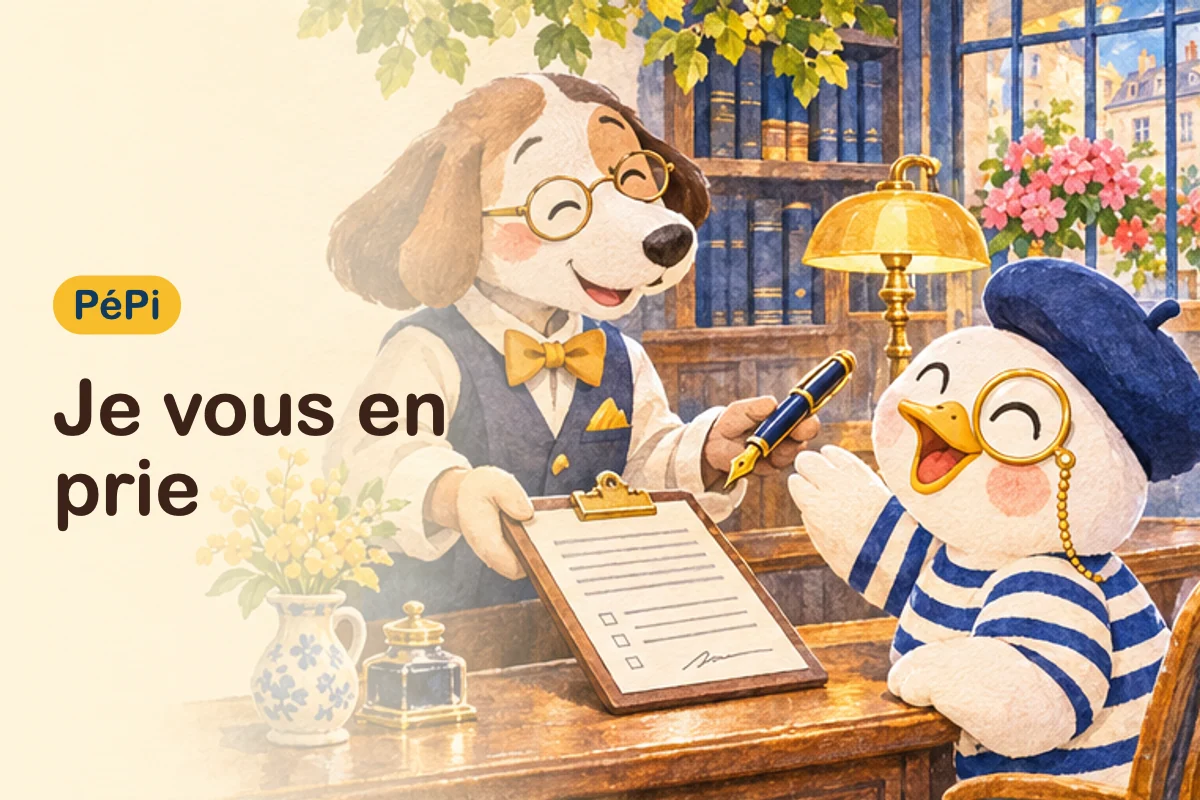
A clerk says je vous prie while handing over a form, and je vous en prie after merci. What changed?
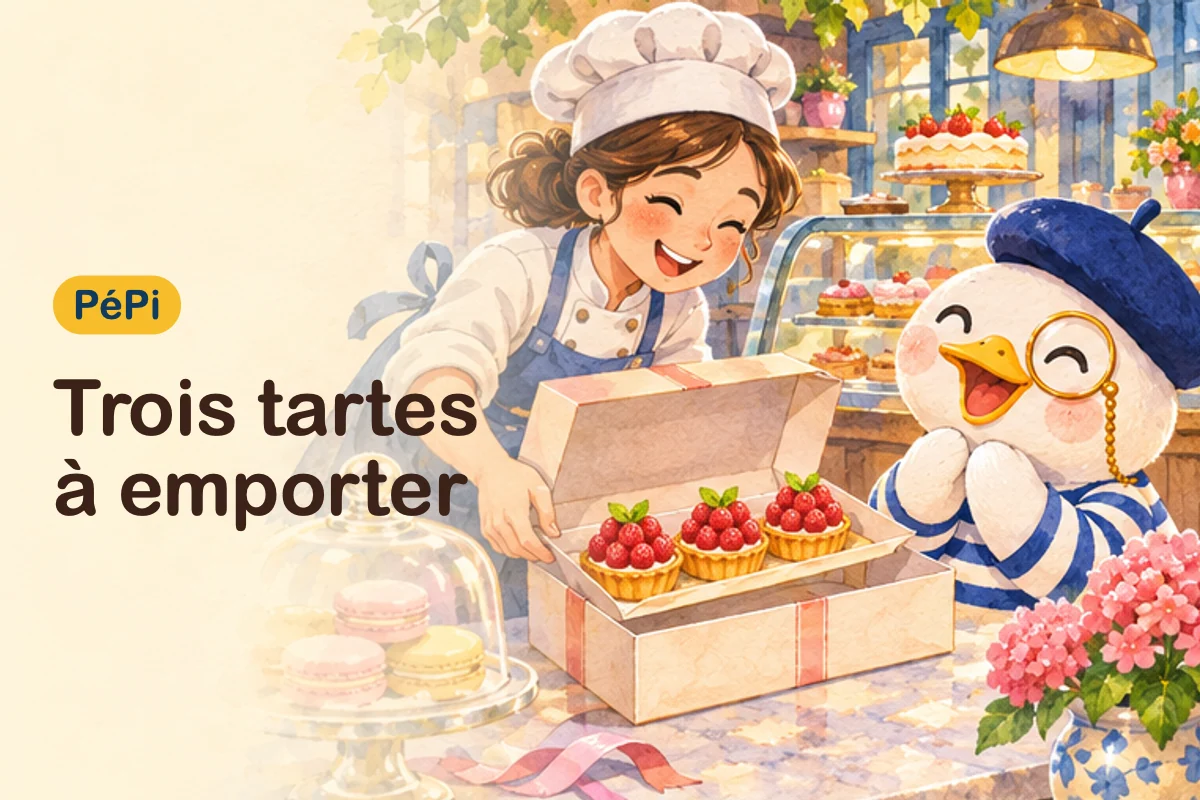
Same bakery, same customers, same tarts. French lets you drop repeated words if you keep track of what each one stands for.
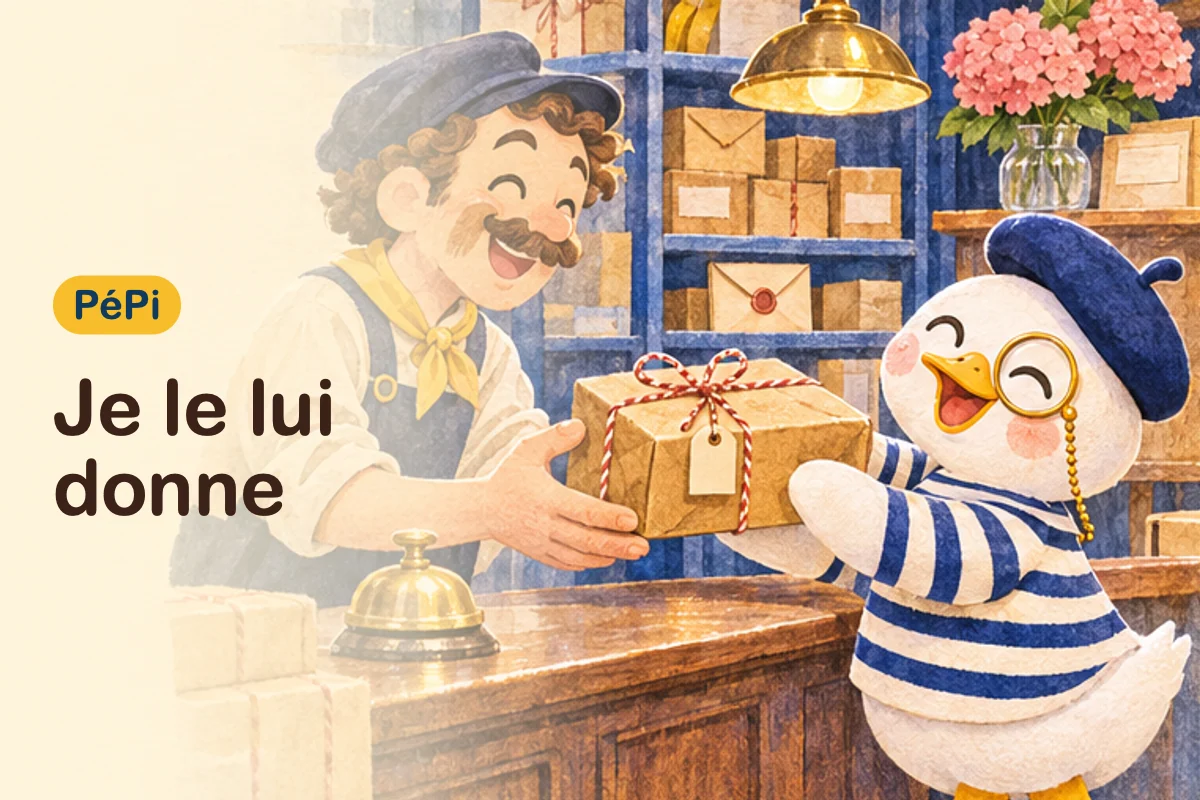
One parcel, one recipient. Replacing both makes the sentence shorter and the order more important.
Thai can tell you gender and relative age in a single kinship word. Sœur by itself leaves one detail open.
A name, brown eyes and “talkative” offer very different clues when you’ve never met the person.
PéPi is holding a cup. The barista is holding the pot. The same drink comes in two different units.
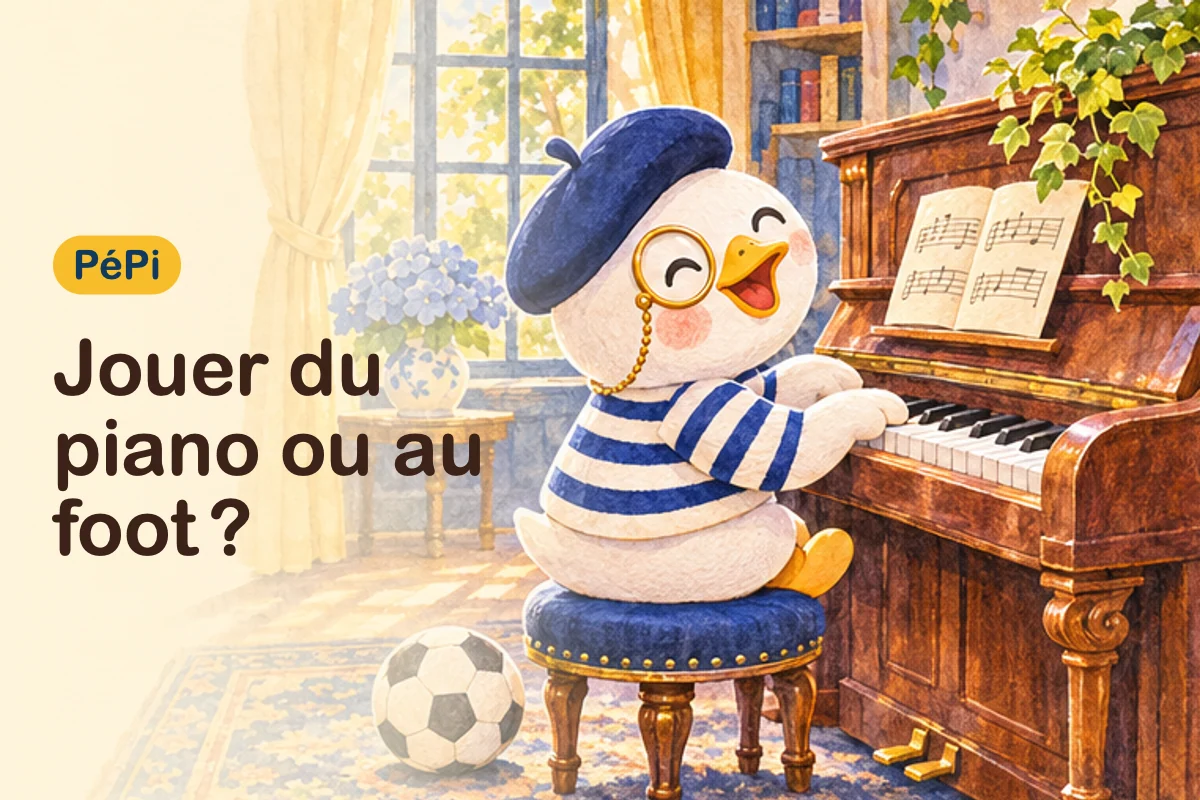
A school programme lands a piano and a football on the same page. The word after jouer changes with the activity.
Writing larger to read your own notes and writing larger so a friend can read them call for different constructions.
PéPi’s hand is halfway to the key when the instruction changes. The pronoun moves too.
“Two” is only half an answer. Is PéPi counting hours, counting sessions or checking the start time?
A perfectly good French sentence can answer the wrong question. Start with the instruction verb.
The price tag doesn’t say whether the bike is for sale or for hire. PéPi begins with what the bike is needed for.
PéPi drafts three pieces of advice, then deletes the first line. The friend’s worry hasn’t had an answer yet.
A question reaches your ears. Reporting it takes a different word order.
There’s already an entry in the diary. The next verb depends on what you want to do with it.
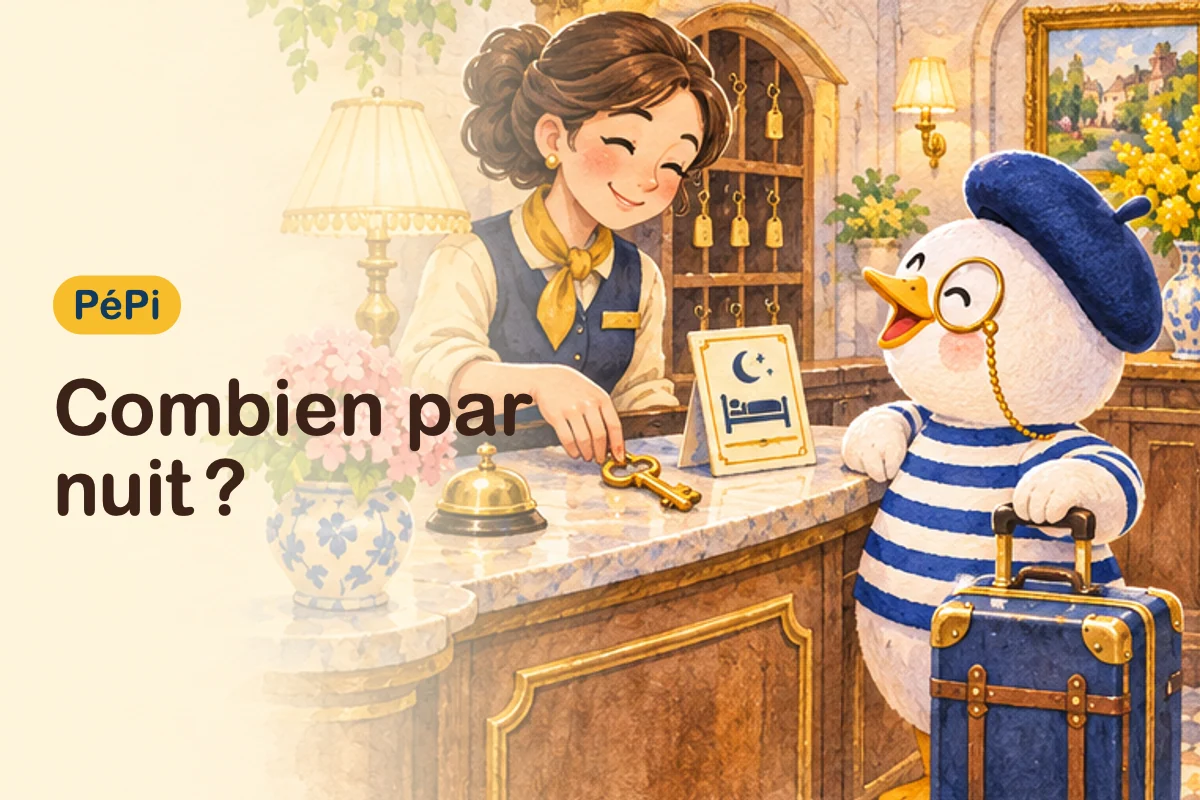
A room is free. PéPi almost wheels the suitcase into the lift before catching the words par nuit.
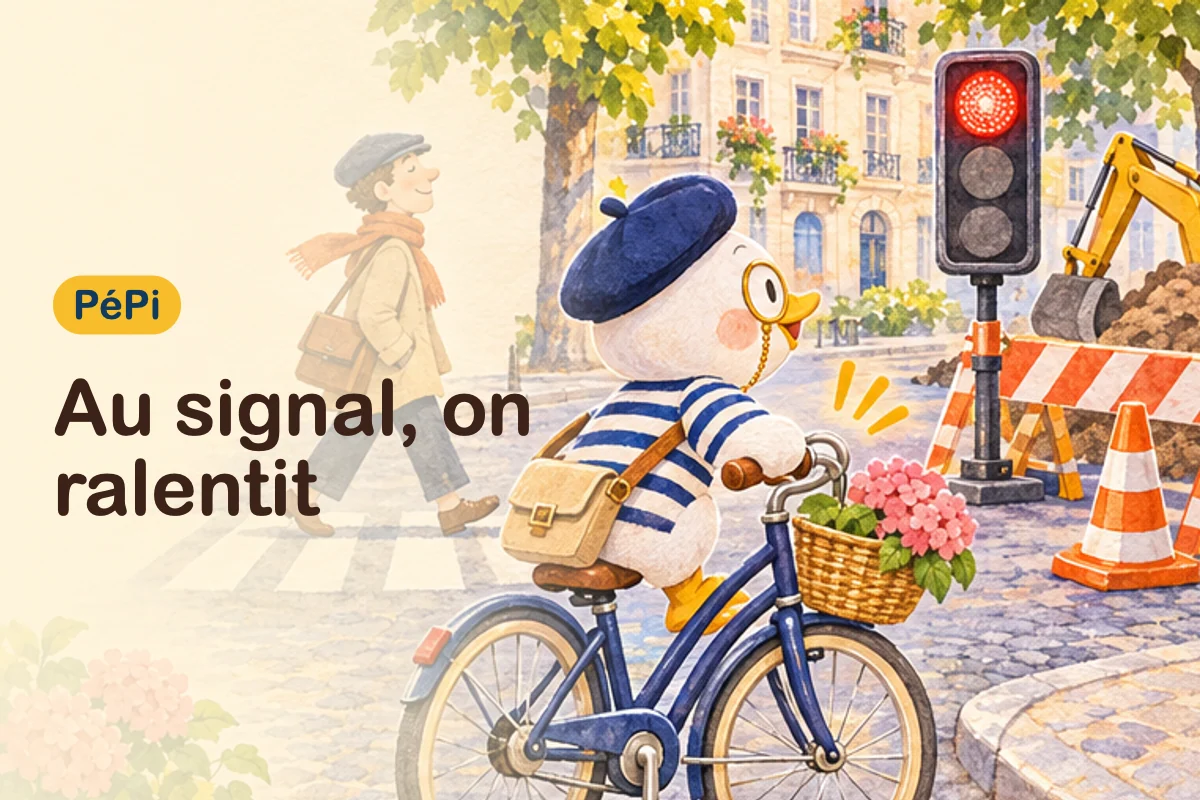
Several verbs fit one road scene. Separate the response, the action and the person who gets help.
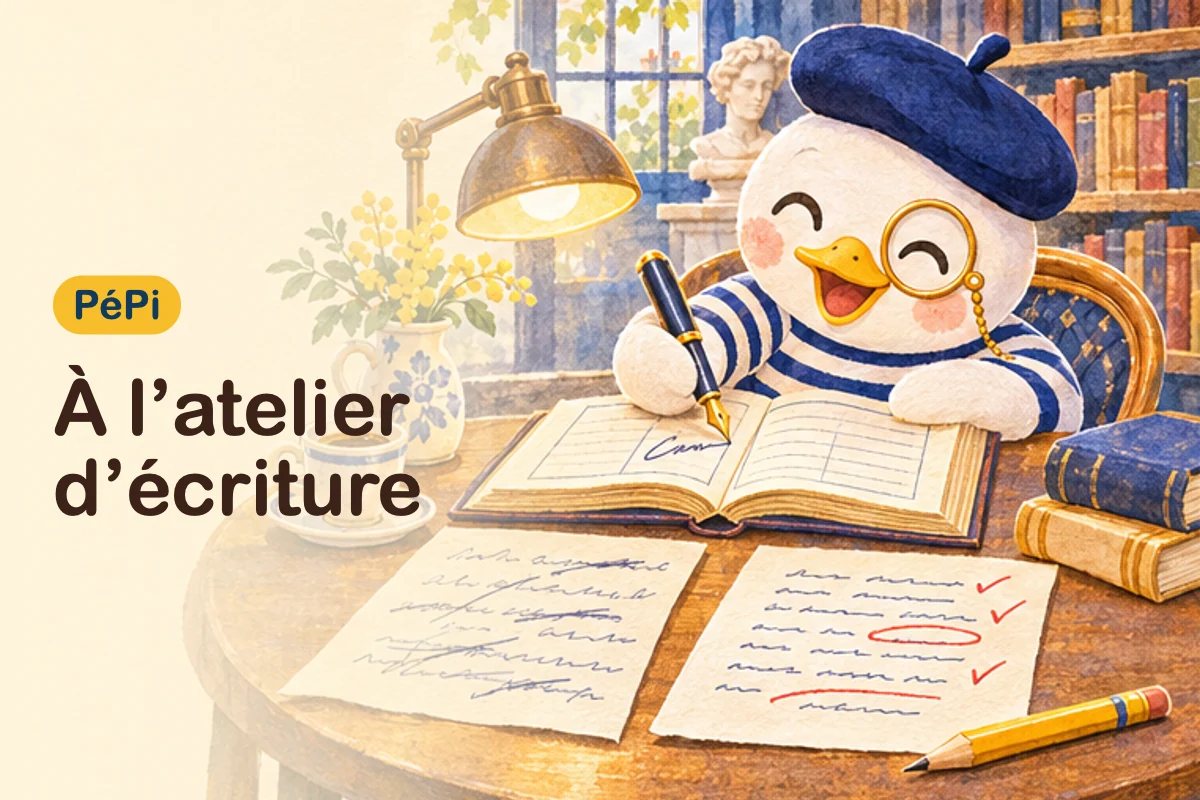
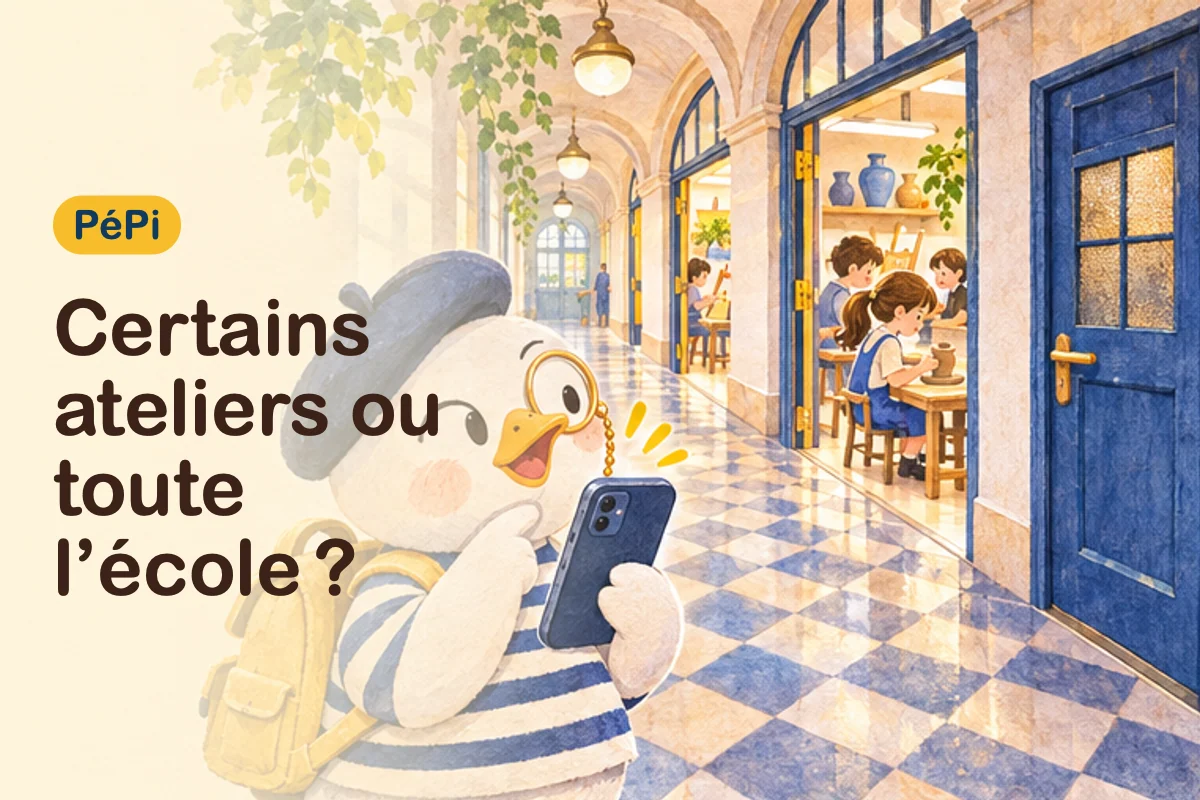
PéPi signs up for a writing workshop. That still leaves choosing a subject, correcting the draft and getting it in on time.
A forwarded message gets shorter and its claim grows bigger. PéPi goes back to the notice for three words worth keeping.
A one-page menu gives PéPi two editing jobs: the de before an adjective and the plural of local.
A photo of some luggage lands on PéPi’s phone. What can son tell you about the bag and its owner?
Three errands, three stops. Change the destination noun and the words after aller change too.
A latecomer has three things to tell you: the scene at the door, the interruption, and what had already happened.
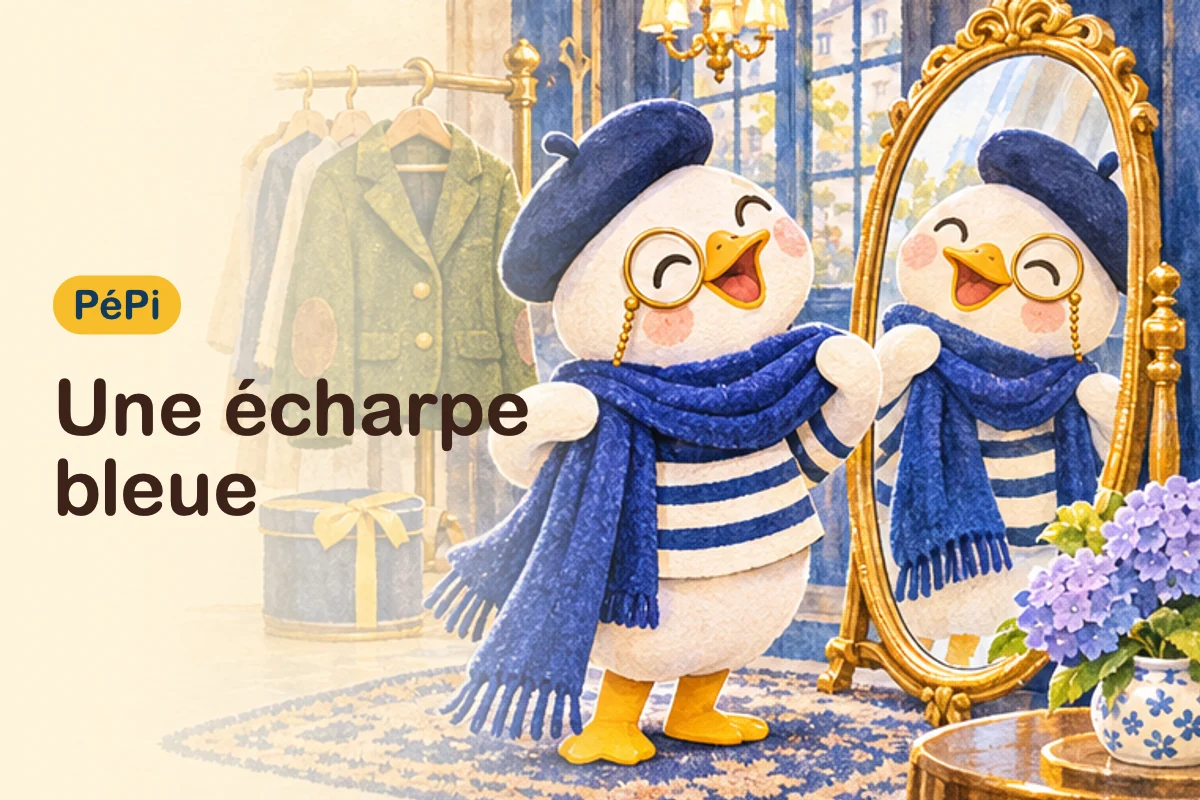
PéPi can point to the right scarf at once. Writing a message about it brings back the question of gender.
PéPi can see the bus. Getting to it takes a more precise verb than “go.”
Two different facts are not enough to choose a connector. See whether one makes the other surprising.
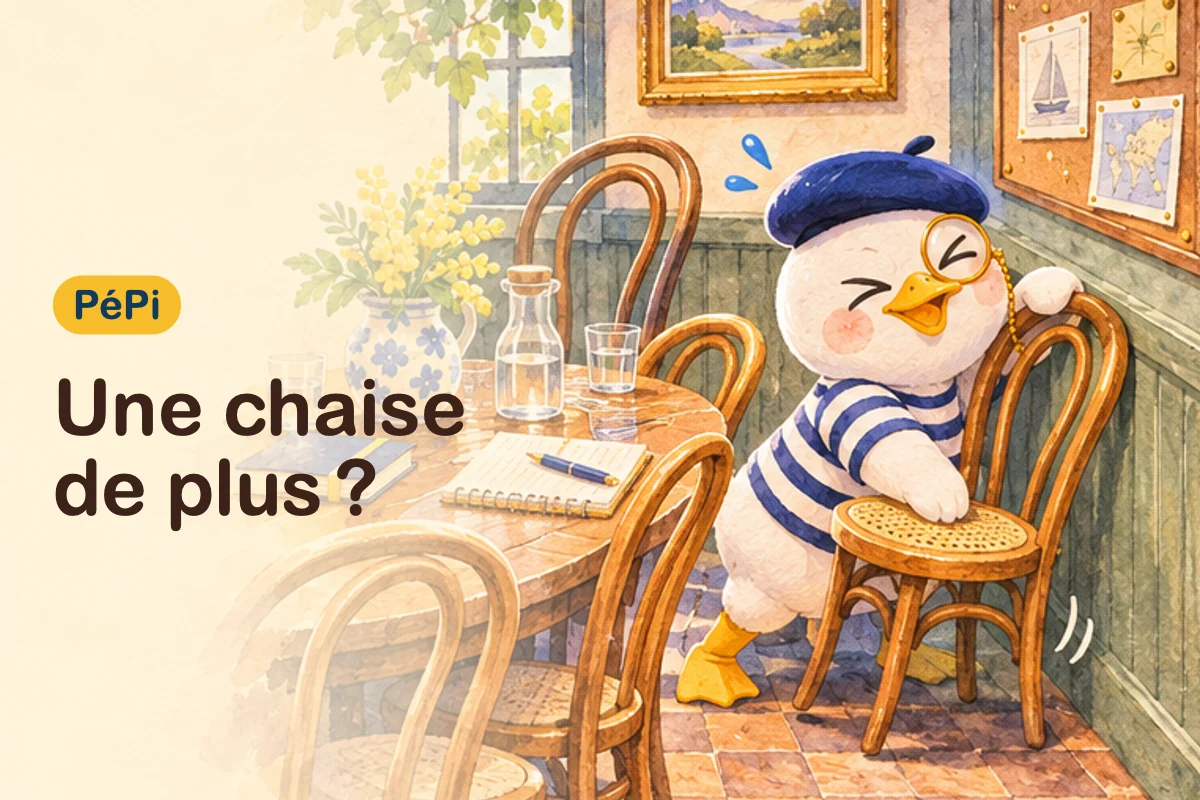
One more chair won’t fit. PéPi imagines a bigger room, asks for help and offers advice. Each gives the conditional a different job.
PéPi writes envoyé twice in one message. The second time it needs two extra letters. Where did the photos go?
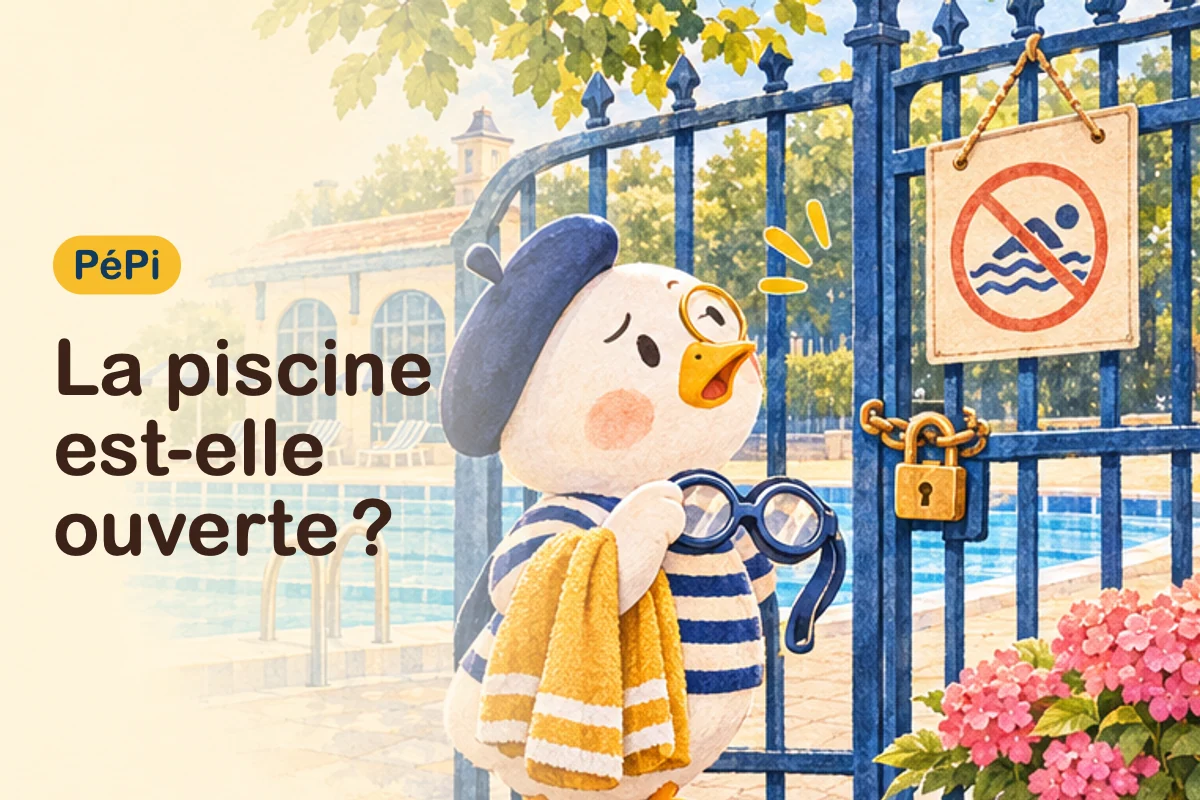
PéPi arrives in a swimsuit. The single noun fermeture is enough reason to read the whole notice.
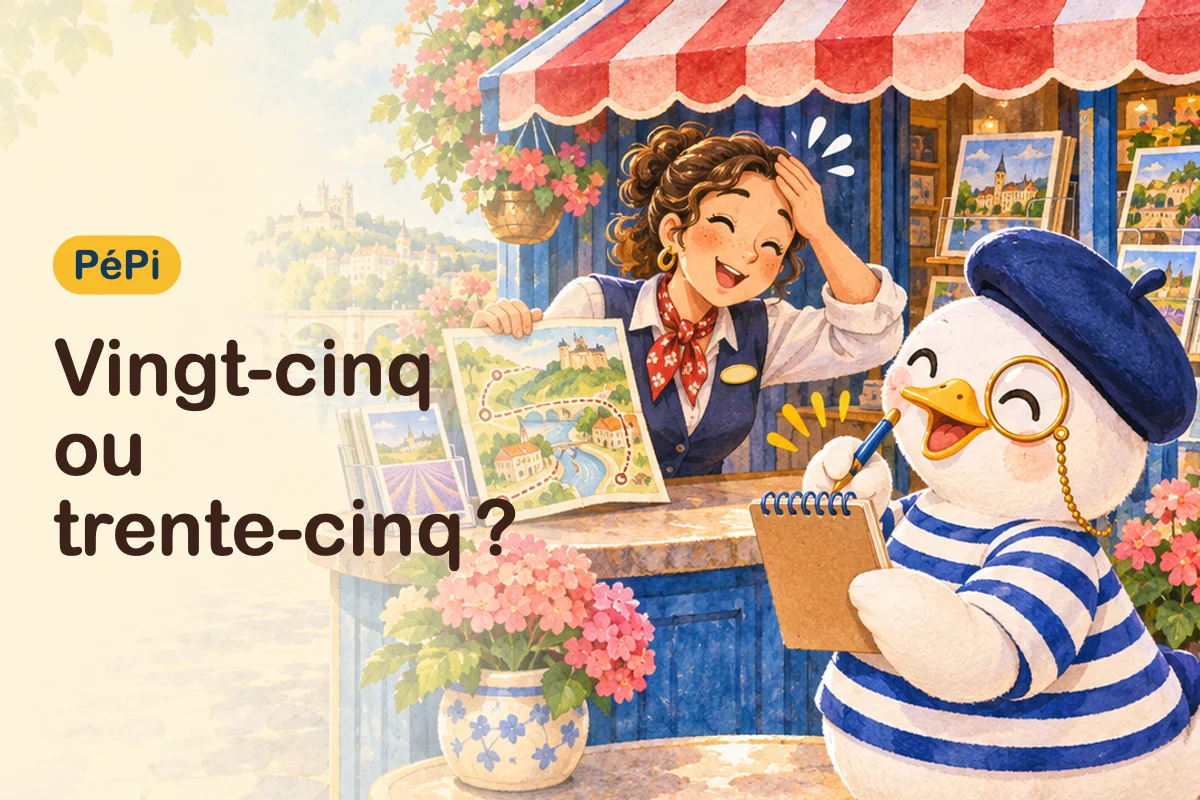
PéPi writes down the first price so fast that the seller’s correction almost slips by.
On a rainy day an umbrella makes a round trip between two people. Follow the umbrella before choosing the verb.
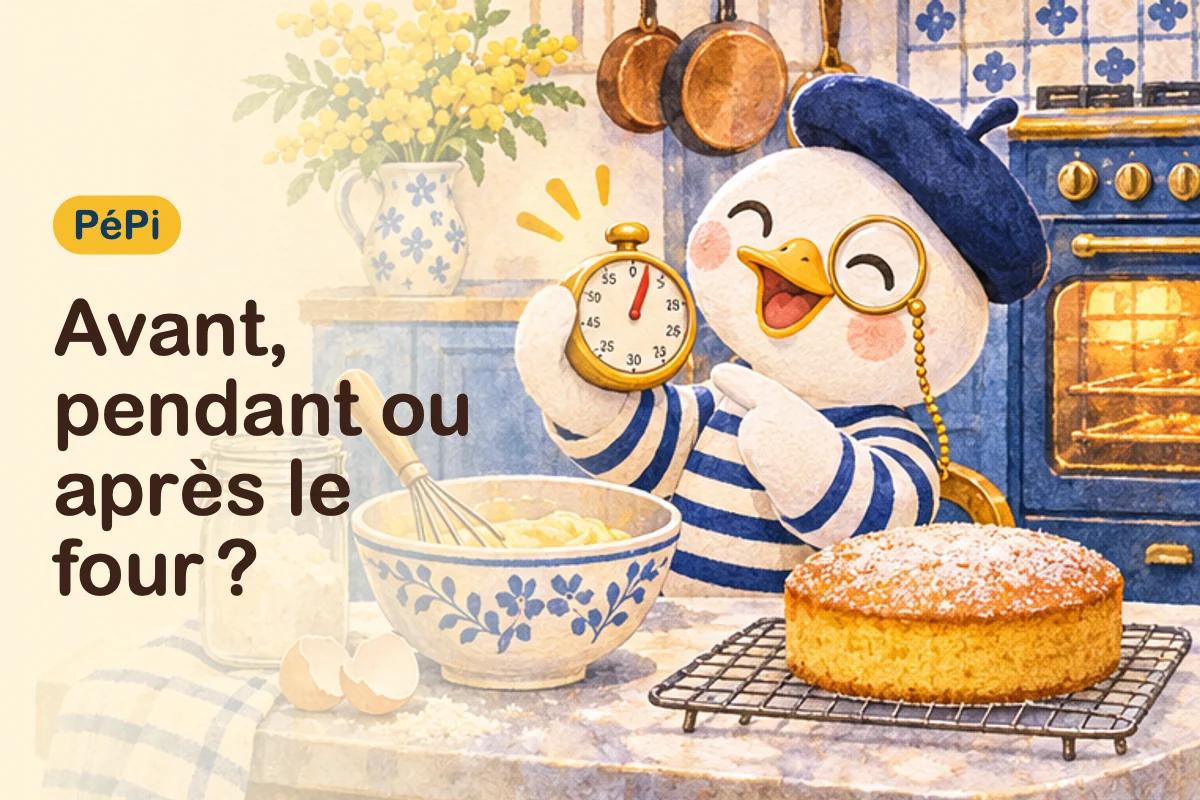
One photo of an oven can fit three captions. Was it taken before, during or after the baking?
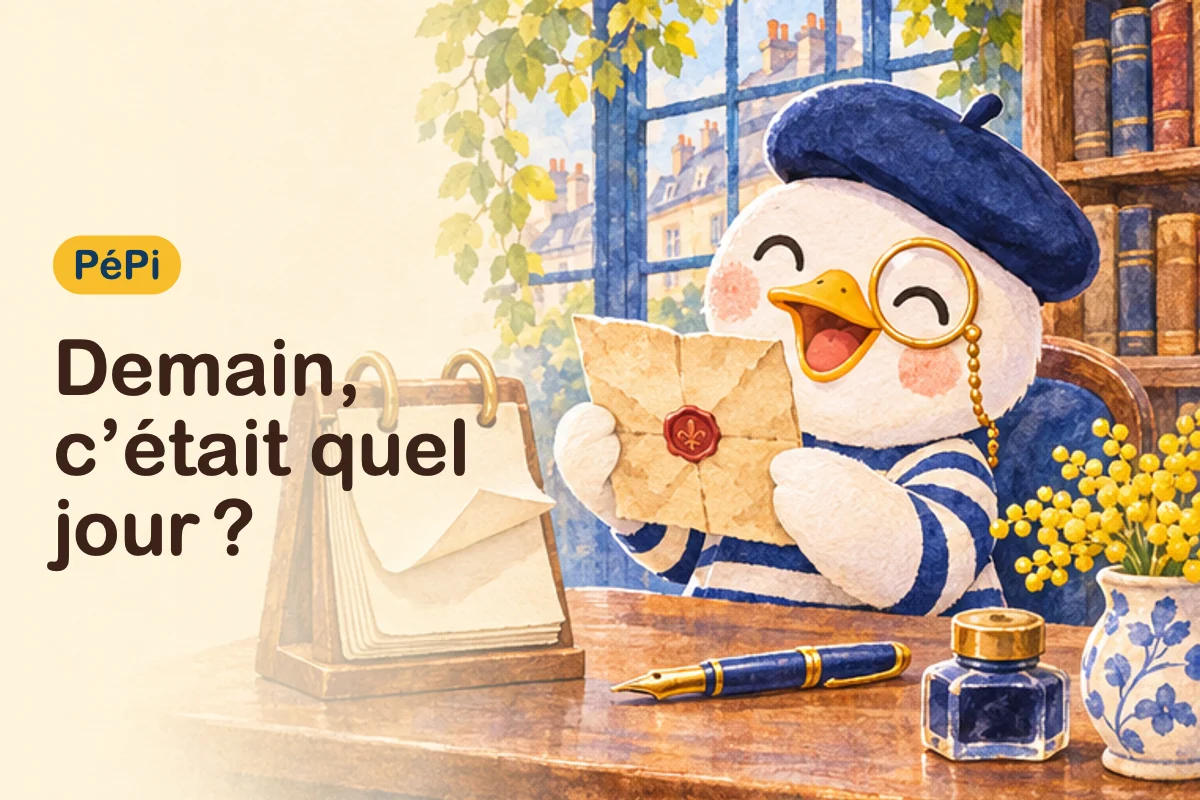
PéPi reads Monday’s message on Thursday. Repeat “tomorrow” without a date and somebody may turn up on Friday.
Choisir and partir share a sign and an -ir ending. Say them aloud with different subjects and the resemblance soon disappears.
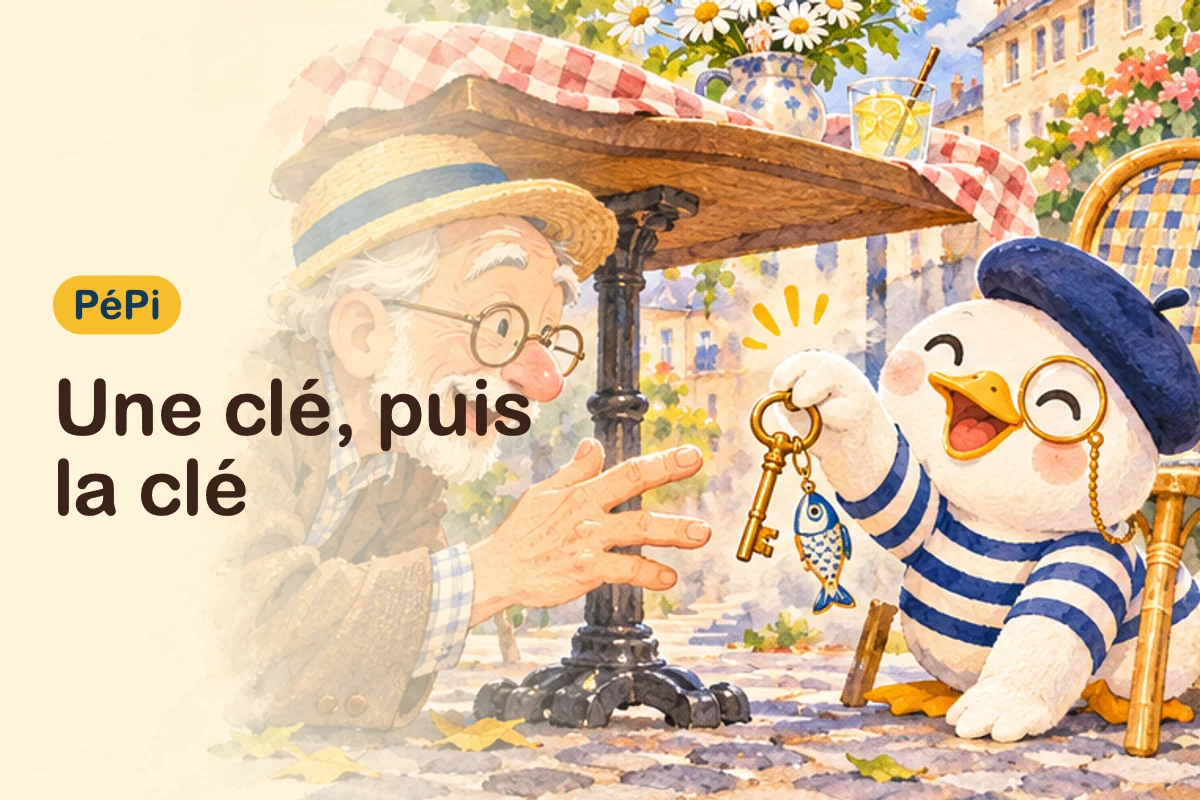
The finder and the owner meet the same key at different moments. Listen for the moment une becomes la.
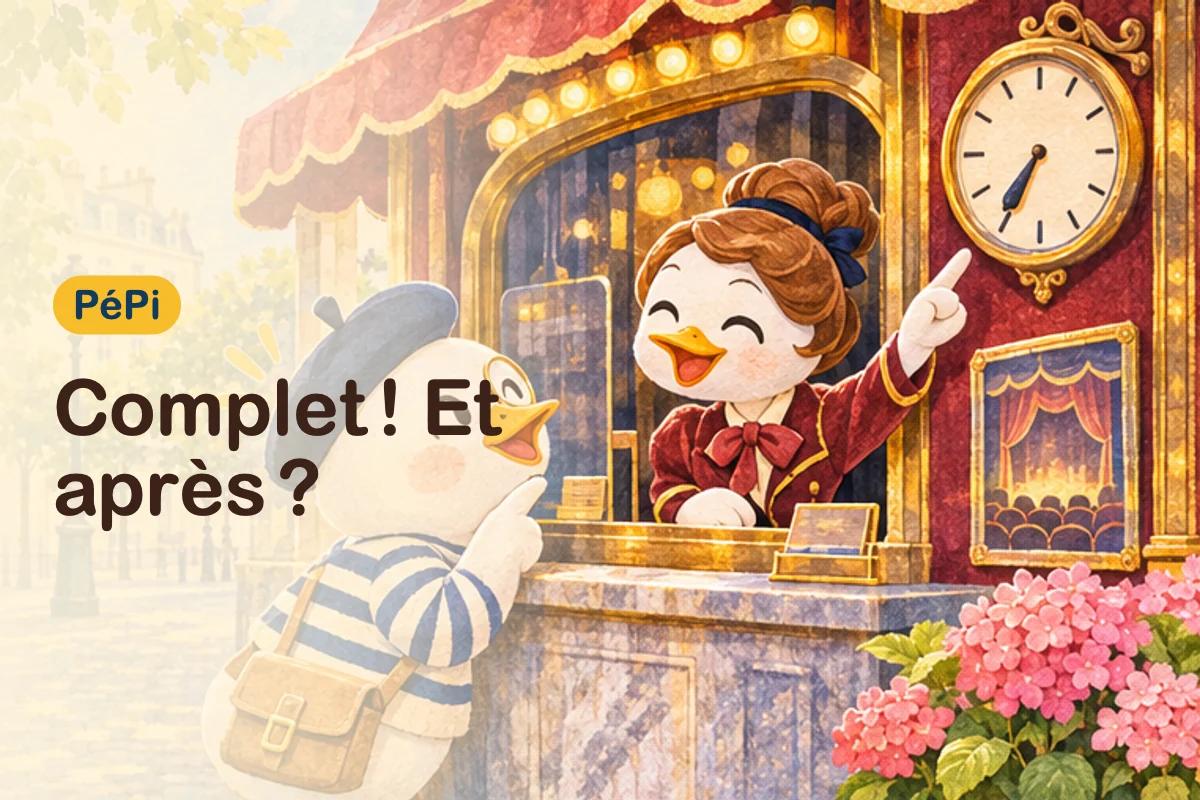
Repeating complet more loudly won’t find a seat. PéPi asks about another session and checks the detail that matters.
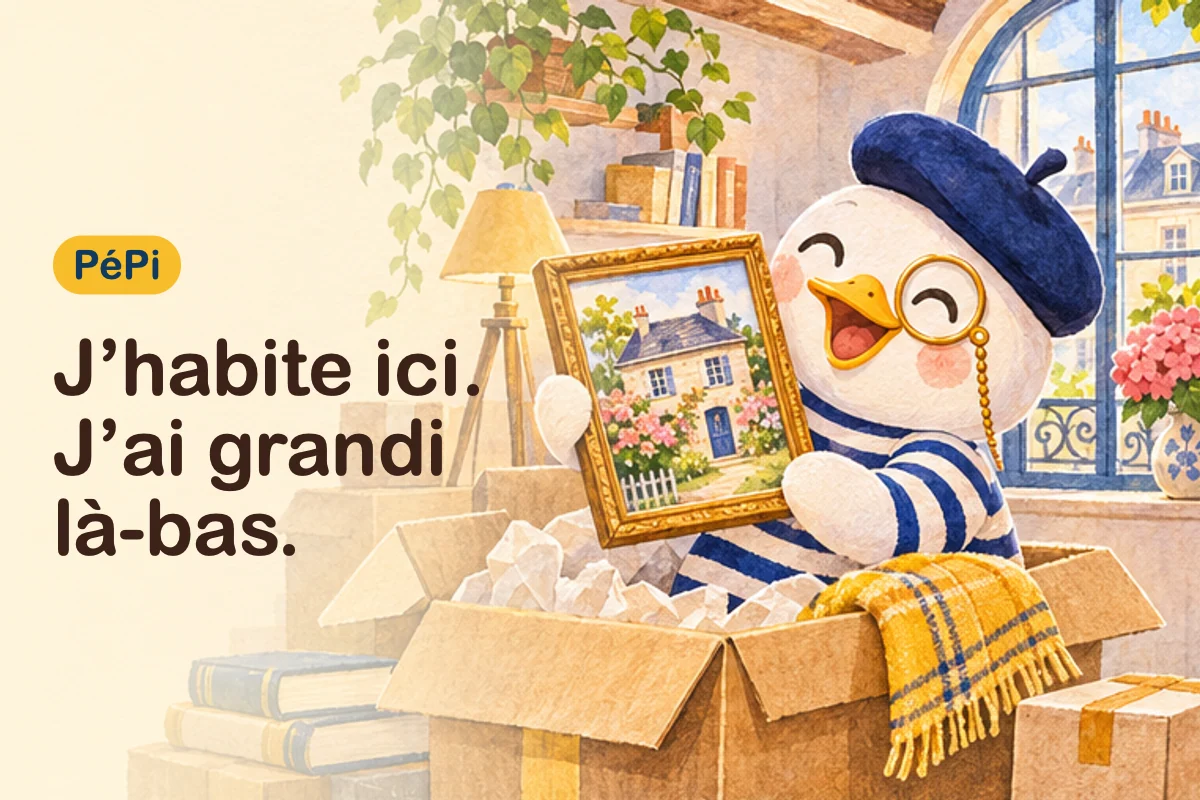
PéPi has moved. An honest answer about home might need two verbs.
A singer and a camera operator share ten seconds of video. A change from qui to que can put a different person behind the camera.
The credits roll faster than PéPi can read. Match each person to what they actually made.
Two neighbours write about the same market. One loves the bustle. The other wants a lie-in. PéPi has to leave room for both voices.
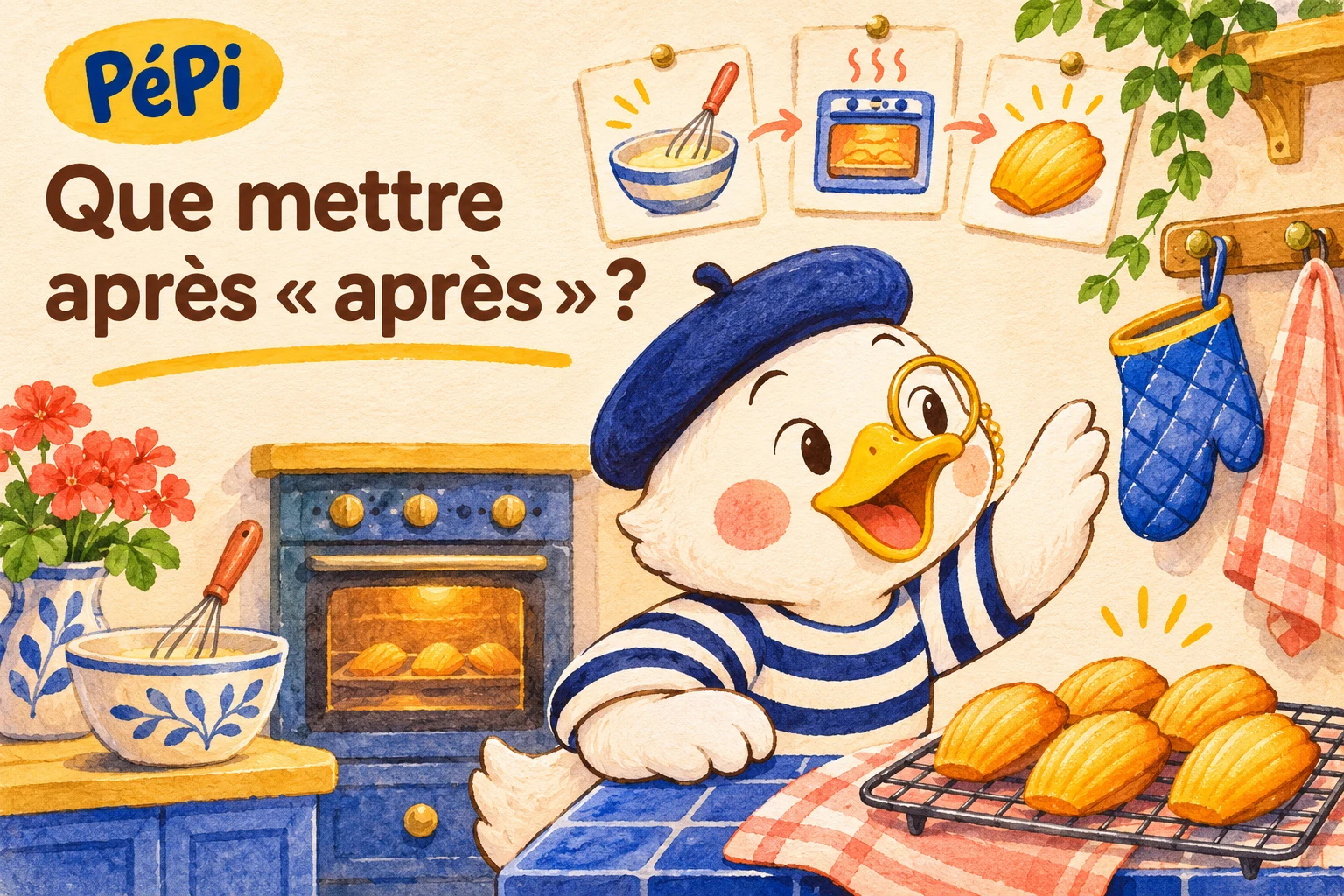
Look at what follows après: a noun, an action by the same subject, or a full clause.
Read the whole task first, then give yourself time to plan, write and check.
All three expressions talk about time, but they connect the past to now in different ways.
Found two similar forms? Start by asking what relationship you want to express, then compare their structures.
Split the idea into two clauses and ask what job the repeated noun does.
The word que does not choose the verb form by itself. Listen to the speaker’s stance and the construction before it.
Choose one thing you want to understand, then move from reading to trying it.
Do not choose by how short or long an event was. Ask whether the verb sets the scene or moves the story forward.
TCF Canada and TCF Tout public have different requirements. Check your version before timing a practice.
Conjugate venir, add de and an infinitive to say what has just happened.
I planted basil five months ago. It’s still growing on my windowsill. Those two sentences need different French expressions.
When two French forms look possible, ask three things. Is it still happening, a scene or an event, a belief or a wish? The answer points to the structure that fits.
I brought a whole stack of cards to the café. Before my tea gets cold, can I use just one in a sentence?
My study buddy slides a notebook across the café table. There’s a star next to depuis. I know what we’re working on today.
By the time my bus turned the corner, my newspaper was getting soggy. Here’s how I’d tell you what happened.
I’ve launched a paper boat. I think it’s making progress. I want it to reach the bank. Listen to what changes after que.